


Why Cybersecurity is Critical for Hotels in the USA
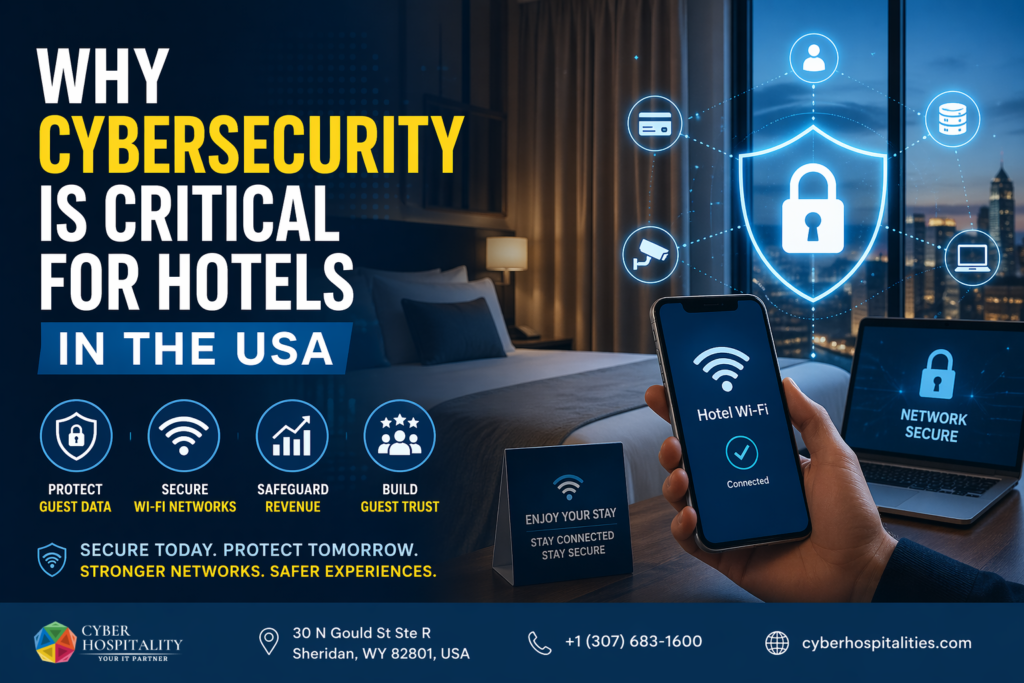
Why Cybersecurity is Critical for Hotels in the USA
The hospitality industry has quietly become one of the most attractive targets for cybercriminals—and many operators don’t realize how exposed they really are. Consider this:
- Over 70% of hotel guests expect fast, secure Wi-Fi as a non-negotiable part of their stay.
- Nearly 1 in 3 hospitality businesses has experienced a data breach in recent years.
- A single cyberattack can cost hotels millions in lost revenue, fines, and reputational damage.
That’s exactly why Why Cybersecurity is Critical for Hotels in the USA is no longer just a technical discussion—it’s a business survival conversation. In fact, Why Cybersecurity is Critical for Hotels in the USA becomes clear the moment you look at how deeply connected modern hotels are—from guest Wi-Fi networks to IoT-enabled rooms.
In today’s digital-first guest experience, Why Cybersecurity is Critical for Hotels in the USA goes beyond protecting data—it’s about protecting trust, operations, and long-term profitability.
The Modern Hotel: A Data Goldmine for Hackers
To understand Why Cybersecurity is Critical for Hotels in the USA, you need to look at what hotels actually store and process daily.
Hotels collect far more than just names and email addresses:
- Payment card information
- Passport and ID details
- Loyalty program data
- Guest preferences (including dietary or medical needs)
- Corporate travel data
This makes hotels incredibly lucrative targets. Unlike banks, which specialize in security, hotels prioritize guest experience—often leaving gaps in infrastructure.
And then there’s the network layer.
The Hidden Risk: Guest Wi-Fi Networks
Guest Wi-Fi is both a necessity and a vulnerability. Without proper segmentation and management:
- Guests can unknowingly connect to malicious networks
- Attackers can intercept sensitive data
- Malware can spread across connected devices
This is where professional systems like those offered by Cyber Hospitality LLC become essential—because unmanaged Wi-Fi is often the weakest link.
The Expanding Attack Surface in Hospitality
Another reason Why Cybersecurity is Critical for Hotels in the USA is gaining urgency is the sheer number of connected systems in modern hotels.
Today’s Hotel Tech Stack Includes:
- Smart room controls (IoT devices)
- Keyless entry systems
- POS systems and payment gateways
- Booking engines and third-party OTAs
- CRM and email marketing platforms
- Staff management systems
Each of these represents a potential entry point.
If even one system is compromised, it can create a domino effect across the entire network.
Common Cyber Threats Facing Hotels
Understanding Why Cybersecurity is Critical for Hotels in the USA also means understanding how attacks actually happen.
1. Phishing & Social Engineering
Employees receive fake emails that mimic booking platforms or internal systems. One wrong click—and credentials are compromised.
2. Fake Booking Websites
Attackers create near-identical hotel websites to steal customer data and payment information.
3. Ransomware Attacks
Entire systems get locked down until a ransom is paid. Hotels can’t check in guests, process payments, or operate normally.
4. DDoS Attacks
Websites and booking engines are overwhelmed with traffic, making them unavailable during peak booking periods.
5. Public Wi-Fi Exploits
Unsecured networks allow attackers to intercept guest data or inject malware.
6. Insider Threats
Not all risks come from outside. Employees—intentionally or accidentally—can compromise systems.
A Real-World Scenario: When Wi-Fi Becomes a Liability
Imagine this:
A guest checks into your hotel after a long journey. The first thing they do? Connect to Wi-Fi.
But instead of a secure, managed network, they connect to a spoofed network set up by a hacker in the lobby.
Within minutes:
- Their login credentials are stolen
- Their corporate VPN is compromised
- Sensitive company data is exposed
The guest leaves a review:
“Nice rooms, but I got hacked using their Wi-Fi. Never staying here again.”
Now multiply that by dozens of guests.
This is exactly Why Cybersecurity is Critical for Hotels in the USA—because one weak link can spiral into a full-blown reputation crisis.
The Cost of Ignoring Cybersecurity
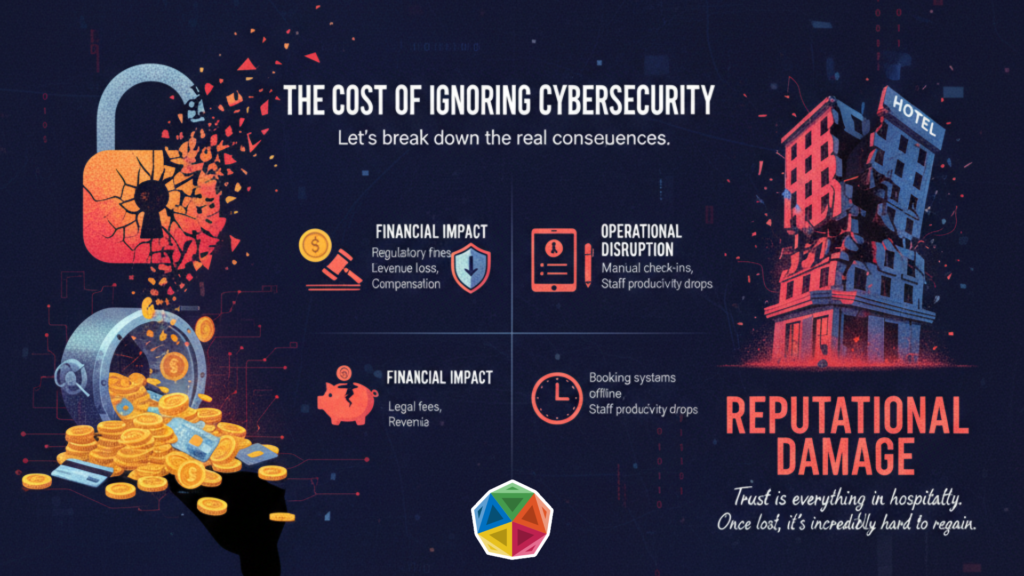
Let’s break down the real consequences.
Financial Impact
- Regulatory fines (PCI DSS violations, data protection laws)
- Legal fees and settlements
- Revenue loss during downtime
- Compensation to affected guests
Operational Disruption
- Booking systems go offline
- Check-ins become manual
- Staff productivity drops
Reputational Damage
Trust is everything in hospitality.
Once lost, it’s incredibly hard to regain.
Managed Wi-Fi vs Traditional DIY Wi-Fi
Here’s where many hotels make a critical mistake—treating Wi-Fi as just an IT utility instead of a strategic asset.
| Feature | Managed Wi-Fi (Cyber Hospitality) | Traditional DIY Wi-Fi |
|---|---|---|
| Network Security | Advanced encryption, segmentation | Basic password protection |
| Threat Detection | Real-time monitoring & alerts | Reactive troubleshooting |
| Guest Data Protection | Privacy-compliant systems | High risk of exposure |
| Bandwidth Optimization | Smart allocation per user/device | Congestion during peak times |
| Compliance | PCI DSS-ready infrastructure | Often non-compliant |
| Guest Experience | Seamless, fast, secure | Inconsistent performance |
This comparison highlights Why Cybersecurity is Critical for Hotels in the USA—because the difference between managed and unmanaged systems is night and day.
The Multi-Layered Defense Approach
There’s no single solution. Effective cybersecurity requires layers.
1. Advanced Technology Stack
- Web Application Firewalls (WAF)
- AI-driven threat detection
- End-to-end encryption
- Secure network segmentation
2. Proactive Network Management
- Continuous monitoring
- Automatic threat mitigation
- Regular updates and patches
3. Compliance & Standards
- PCI DSS compliance for payment systems
- Data protection frameworks
- Privacy-first architecture
4. Employee Training
Human error remains the biggest risk.
Regular training helps staff:
- known phishing attempts
- Follow secure login practices
- Handle guest data responsibly
5. Cyber Insurance
A safety net for financial losses in case of a breach.
Bandwidth Management: The Overlooked Security Layer
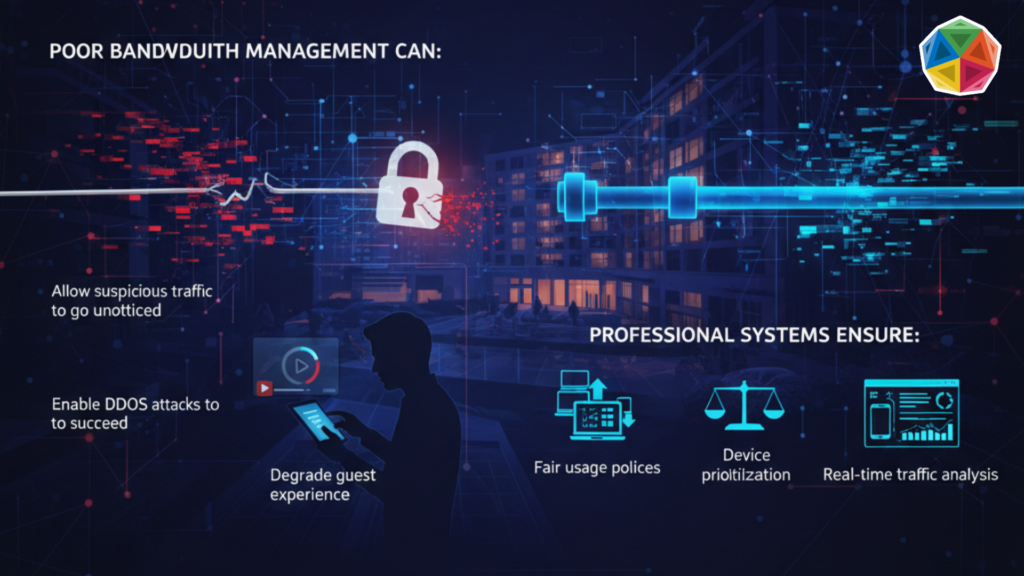
Bandwidth isn’t just about speed—it’s about control.
Poor bandwidth management can:
- Allow suspicious traffic to go unnoticed
- Enable DDoS attacks to succeed
- Degrade guest experience
Professional systems ensure:
- Fair usage policies
- Device prioritization
- Real-time traffic analysis
This is another key reason Why Cybersecurity is Critical for Hotels in the USA—because performance and security are deeply connected.
Guest Experience and Cybersecurity: Two Sides of the Same Coin
Hotels often think security slows things down.
In reality, it enhances the experience.
A secure network means:
- Faster, more reliable connections
- Safer online transactions
- Greater guest confidence
And in today’s review-driven economy, confidence translates directly into bookings.
Why Hotels Need Cyber Hospitality LLC
Cyber Hospitality LLC specializes in professional hotel Wi-Fi management systems designed specifically for the hospitality industry.
What Sets Them Apart:
- Hospitality-first network design
- Built-in cybersecurity protocols
- Seamless guest onboarding experience
- Scalable solutions for all property sizes
- 24/7 monitoring and support
Instead of juggling multiple vendors, hotels get a unified solution that covers both performance and protection.
The Bottom Line
The conversation around Why Cybersecurity is Critical for Hotels in the USA has fundamentally changed.
It’s no longer just about preventing attacks—it’s about:
- Protecting guest trust
- Ensuring operational continuity
- Safeguarding revenue
- Delivering a premium digital experience
Hotels that treat cybersecurity as a core business function—not an afterthought—will be the ones that thrive in the next decade.
FAQ Section
1. Why is cybersecurity so important for hotels?
Hotels handle sensitive guest data and operate interconnected systems, making them prime targets for cyberattacks. Strong cybersecurity protects both operations and reputation.
2. How does guest Wi-Fi create security risks?
Unsecured Wi-Fi networks can allow attackers to intercept data, spread malware, or create fake networks to steal guest information.
3. What is PCI DSS and why does it matter?
PCI DSS is a security standard for handling payment data. Compliance helps prevent breaches and avoids heavy penalties.
4. Can small hotels also be targeted by cyberattacks?
Yes. In fact, smaller hotels are often targeted because they tend to have weaker security systems.
5. What is the benefit of managed Wi-Fi systems?
Managed Wi-Fi provides enhanced security, better performance, real-time monitoring, and compliance support—all critical for modern hotels.
