


WiFi Marketing for Cultural Venues | Boost Guest Experience
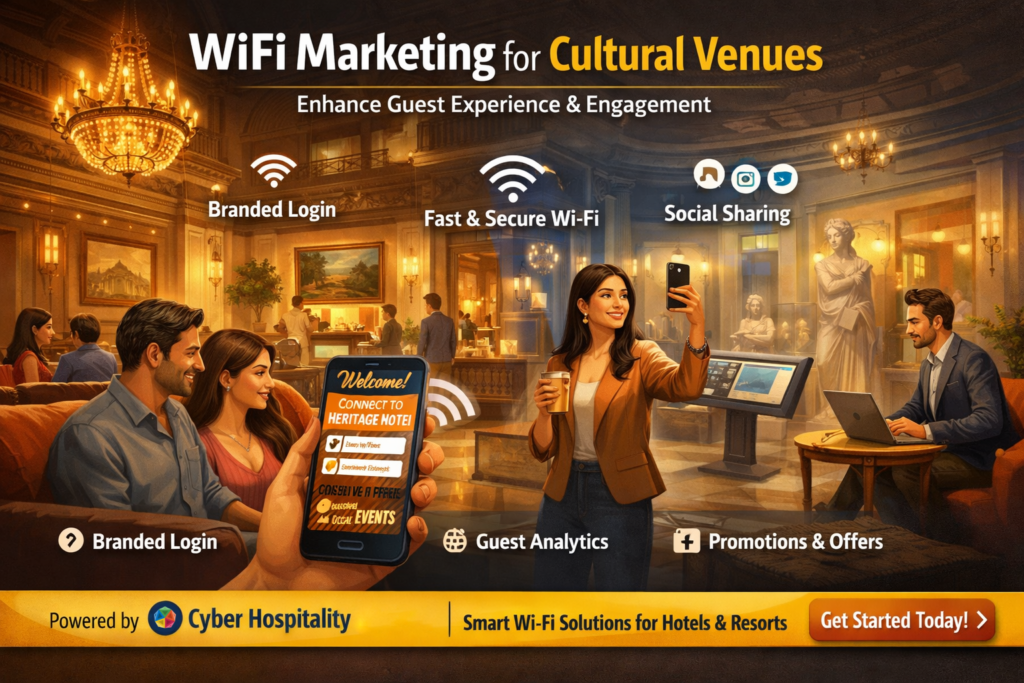
WiFi Marketing for Cultural Venues | Boost Guest Experience
In today’s hospitality landscape, Wi-Fi is no longer a “nice-to-have”—it’s the backbone of the guest experience. Consider this: over 85% of hotel guests rate reliable Wi-Fi as one of the top three factors influencing their stay, and nearly 70% say poor connectivity directly impacts their likelihood to return. Add to that the rise of digital engagement expectations—QR menus, mobile check-ins, streaming—and you begin to see why WiFi Marketing for Cultural Venues has become a strategic necessity rather than a technical afterthought.
For cultural venues—think heritage hotels, boutique resorts, museums, and experiential spaces—the stakes are even higher. Guests expect immersive, story-driven environments, but they also expect seamless connectivity. This is where WiFi Marketing for Cultural Venues becomes a powerful tool, blending infrastructure with engagement, analytics, and brand storytelling.
Why Wi-Fi Is the New Front Desk
Traditionally, guest interaction started at the front desk. Today, it begins the moment a guest connects to your network. That connection point is prime real estate for engagement.
With modern WiFi Marketing for Cultural Venues, hotels can:
- Capture guest data ethically through captive portals
- Deliver personalized welcome messages
- Promote on-site amenities and cultural experiences
- Encourage social sharing and reviews
- Build long-term loyalty programs
In essence, your Wi-Fi network becomes a digital concierge—always available, always responsive.
Understanding the Cultural Venue Challenge
Cultural venues operate differently from standard business hotels. Their value lies in storytelling, ambiance, and unique guest journeys. However, these strengths also introduce technical challenges:
- Thick walls in heritage buildings can disrupt signal strength
- High-density areas (like galleries or event halls) strain bandwidth
- Guests often upload media-heavy content (photos, videos, livestreams)
- International visitors expect seamless roaming and secure access
Without a robust solution, these challenges can quickly turn into negative guest experiences.
What Is WiFi Marketing for Cultural Venues?
At its core, WiFi Marketing for Cultural Venues is the integration of managed Wi-Fi infrastructure with marketing automation tools. It allows venues to turn connectivity into a revenue-generating and engagement-driving asset.
Instead of offering “just internet,” you’re offering:
- A branded login experience
- Data-driven guest insights
- Real-time marketing opportunities
- Secure, high-performance connectivity
This is where companies like Cyber Hospitality LLC. come into play, specializing in professional hotel Wi-Fi management systems designed specifically for hospitality environments.
Managed Wi-Fi vs. Traditional DIY Wi-Fi
Let’s break down the difference between a professionally managed system and a typical DIY setup.
| Feature | Managed Wi-Fi (Cyber Hospitality) | Traditional DIY Wi-Fi |
|---|---|---|
| Network Security | Enterprise-grade encryption, firewalls, guest isolation | Basic router-level security |
| Bandwidth Management | Dynamic allocation based on usage | Fixed bandwidth, often overloaded |
| Guest Analytics | Real-time data, behavior tracking | Limited or no analytics |
| Marketing Integration | Captive portals, promotions, CRM sync | None |
| Support | 24/7 monitoring and troubleshooting | Reactive, manual fixes |
| Scalability | Easily adapts to occupancy and events | Requires hardware upgrades |
The difference isn’t just technical—it’s experiential. Managed Wi-Fi transforms connectivity into a strategic asset.
The Guest Experience: Where Technology Meets Emotion
Guests don’t think in terms of bandwidth or latency—they think in terms of experience.
Imagine this scenario:
A couple checks into a heritage hotel for their anniversary. The ambiance is perfect. They head to their room, try to stream a movie, and the connection keeps buffering. Frustrated, they switch to mobile data. Later, they attempt to upload photos from the property—slow speeds again.
By checkout, their perception has shifted. What started as a magical stay ends with a 3-star review mentioning “poor Wi-Fi.”
Now flip the scenario:
They connect instantly to a branded Wi-Fi portal that welcomes them by name, suggests romantic dining options, and offers a discount on spa services. Streaming works flawlessly. Uploads are instant. They tag the hotel on social media.
Same property. Completely different outcome.
That’s the impact of WiFi Marketing for Cultural Venues done right.
Technical Foundations That Make It Work
To deliver this level of experience, the underlying infrastructure must be robust. Here’s what that entails:
1. Intelligent Bandwidth Management
- Prioritizes critical applications (streaming, video calls)
- Prevents bandwidth hogging by individual users
- Adapts dynamically to occupancy levels
2. Advanced Network Security
- WPA3 encryption standards
- Guest network isolation
- Firewall and intrusion detection systems
This ensures compliance with global data protection standards while safeguarding guest privacy.
3. Seamless Roaming
- Guests can move across the property without reconnecting
- Ideal for large cultural venues with multiple zones
4. Scalable Access Point Deployment
- Strategically placed APs to eliminate dead zones
- Optimized for architectural constraints (heritage buildings, open courtyards)
5. Real-Time Monitoring
- 24/7 network health tracking
- Instant alerts for downtime or congestion
- Proactive issue resolution
These elements are the backbone of any successful WiFi Marketing for Cultural Venues strategy.
Turning Data into Revenue
One of the most overlooked benefits of managed Wi-Fi is data.
With the right system, you can:
- Identify repeat guests
- Understand peak usage times
- Track engagement with promotions
- Segment audiences based on behavior
This data can then be used to:
- Personalize offers
- Optimize pricing strategies
- Improve operational efficiency
For example, if analytics show high Wi-Fi usage near your café during afternoons, you can push targeted offers during that time window.
Case Study-Style Insight: The Cost of Poor Connectivity
A mid-sized boutique hotel in a culturally rich destination noticed a decline in online ratings despite maintaining high service standards. Upon deeper analysis, a pattern emerged—guests consistently complained about unreliable Wi-Fi.
The management initially dismissed it as a minor issue. However, after implementing a managed solution similar to what Cyber Hospitality LLC. offers, the results were telling:
- Guest satisfaction scores increased by 25%
- Average review ratings improved from 3.8 to 4.4
- Social media mentions doubled within three months
The takeaway? Connectivity isn’t just a utility—it’s a reputation driver.
Why Cyber Hospitality LLC. Stands Out
When it comes to implementing WiFi Marketing for Cultural Venues, not all providers are created equal.
Cyber Hospitality LLC. specializes in hospitality-focused Wi-Fi solutions, offering:
- End-to-end network design and deployment
- Custom captive portals aligned with brand identity
- Advanced analytics dashboards
- 24/7 technical support
- Scalable solutions for multi-property chains
Their expertise lies in understanding the unique demands of cultural venues—balancing aesthetics, architecture, and technology.
Common Mistakes Hotels Make
Even well-intentioned hotels often fall into these traps:
- Underestimating bandwidth needs
- Using consumer-grade routers for enterprise environments
- Ignoring security protocols
- Failing to leverage Wi-Fi for marketing
- Reactive rather than proactive maintenance
Each of these can erode guest trust and impact revenue.
Future Trends in WiFi Marketing for Cultural Venues
The evolution of WiFi Marketing for Cultural Venues is just getting started. Emerging trends include:
- AI-driven personalization
- Integration with IoT devices (smart rooms)
- Location-based marketing within properties
- Enhanced cybersecurity frameworks
- 5G and hybrid network models
Hotels that adopt these early will have a significant competitive edge.
Conclusion: From Utility to Strategy
Wi-Fi is no longer just about connectivity—it’s about experience, engagement, and revenue. For cultural venues, where storytelling and guest immersion are key, the role of Wi-Fi becomes even more critical.
Investing in WiFi Marketing for Cultural Venues is not just a technical upgrade—it’s a strategic move. And with the right partner like Cyber Hospitality LLC., hotels can transform their digital infrastructure into a powerful growth engine.
FAQs
1. What is WiFi marketing in hospitality?
WiFi marketing involves using your guest Wi-Fi network as a tool to engage visitors through branded login pages, data collection, and personalized promotions.
2. Why is managed Wi-Fi better than DIY solutions?
Managed Wi-Fi offers better security, scalability, analytics, and support, ensuring a seamless guest experience and reducing operational risks.
3. How does WiFi impact guest satisfaction?
Reliable Wi-Fi directly influences reviews, repeat bookings, and overall guest perception of your property.
4. Is WiFi marketing secure for guest data?
Yes, when implemented with enterprise-grade security protocols like encryption and network isolation, guest data remains protected and compliant with regulations.
5. Can small cultural venues benefit from WiFi marketing?
Absolutely. Even smaller venues can use WiFi marketing to enhance engagement, promote services, and build customer loyalty.
